
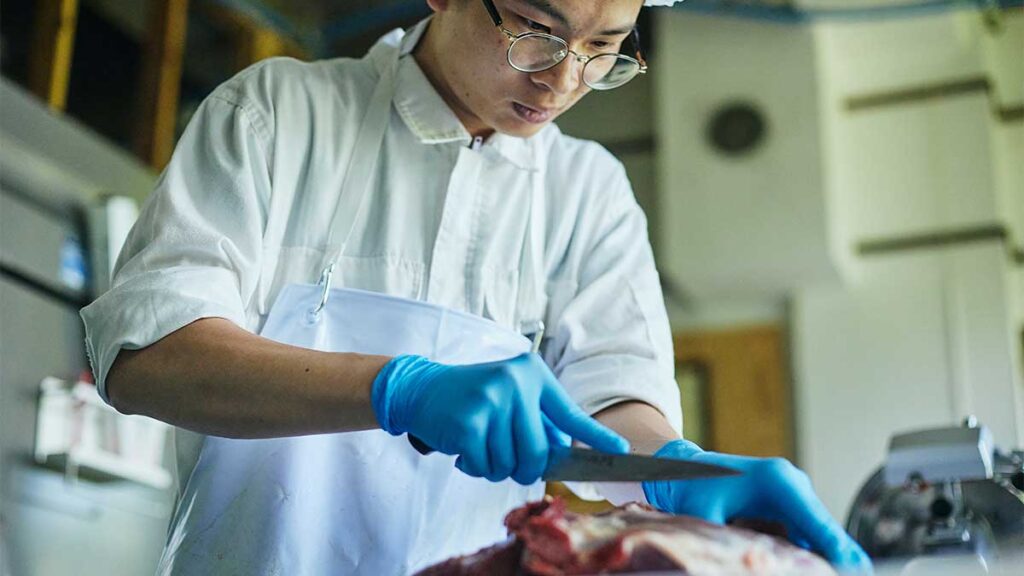
Cradled by both sea and mountains, Shinonsen Town enjoys the blessings of abundant natural beauty. Yet behind its striking landscapes lies a serious and growing challenge: wildlife damage. Across Japan, overpopulation of wild animals has become a critical issue. One young entrepreneur is asking a difficult question—can this problem be transformed into regional value rather than treated as an unavoidable loss?
That question has led Eimi Ozeki, founder of KASEGI Co., Ltd., to relocate to Shinonsen Town and commit himself fully to the community. His work confronts the reality of discarded animal lives and seeks to build a new model for rural sustainability—one grounded in responsibility, respect, and long-term thinking.
A New Path Rooted in Place
Born in 1999 in Aichi Prefecture, Ozeki originally worked in the restaurant industry. When the COVID-19 pandemic forced him to leave his job, he began searching for a new direction. A pivotal moment came when a career advisor introduced him to work related to regional revitalization.
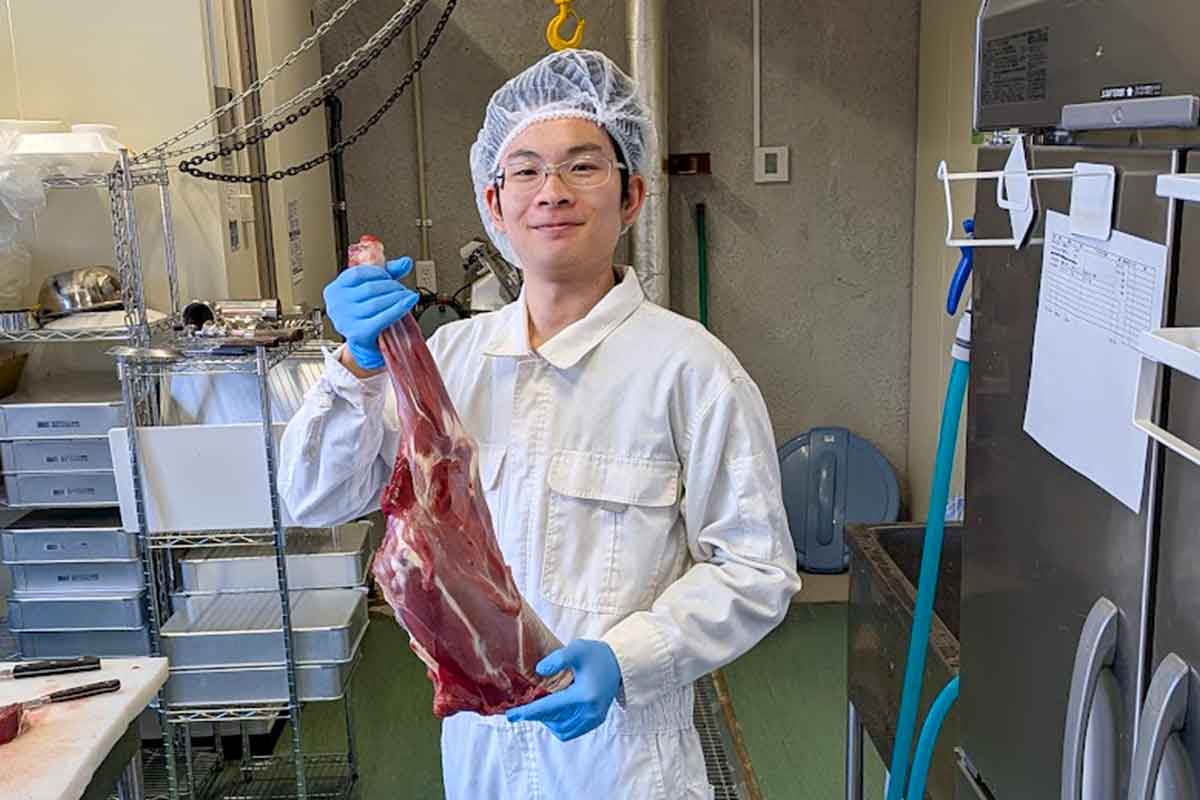
In 2021, Ozeki moved to Shinonsen Town as a member of Japan’s Community Revitalization Cooperation Team, a program designed to support rural communities. After four years of on-the-ground experience, he founded and now operates Okuhatta Mori no Shikaniku Kobo, a venison processing workshop rooted in the Okuhatta region.
Life in Shinonsen Town
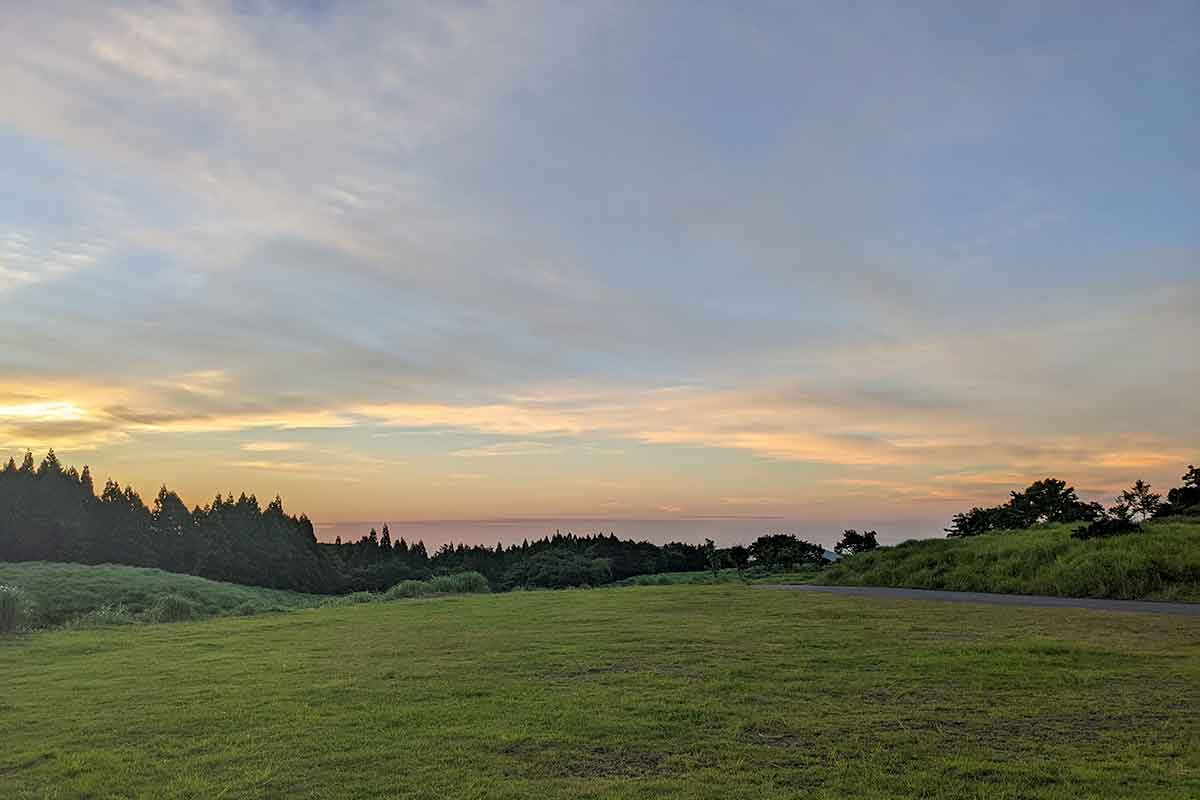
Life in Shinonsen Town, Ozeki says, is deeply rewarding. The area offers not only rich food culture but also landscapes shaped by the seasons: refreshing early-summer breezes across the Ueyama Highlands, emerald-green waters along the Igumi coast in summer, and the restorative hot springs of Yumura in winter. While the heavy snowfall still takes some getting used to, he laughs, it is part of the region’s character.
He has also been struck by the strength of the local community. Connections form easily, both professionally and personally, and he speaks warmly of the openness and generosity of the people he has met.
Why a Venison Workshop?
The idea for Okuhatta Mori no Shikaniku Kobo grew from Ozeki’s firsthand exposure to the region’s environmental challenges. While working with conservation efforts in Okuhatta and the Ueyama Highlands, he encountered the serious damage caused by deer overpopulation—destroyed crops, disrupted ecosystems, and difficult realities for farmers and residents alike.
Although deer are culled as part of wildlife management, Ozeki learned that many of these animals are ultimately discarded. Faced with this reality, he felt compelled to act.
“If these lives must be taken,” he says, “then they should be respected and put to meaningful use.”
With that conviction, he set out to create a new local industry—one that transforms venison into a valuable resource while establishing a sustainable economic model rooted in the region.
Crafting Quality Through Care and Technique
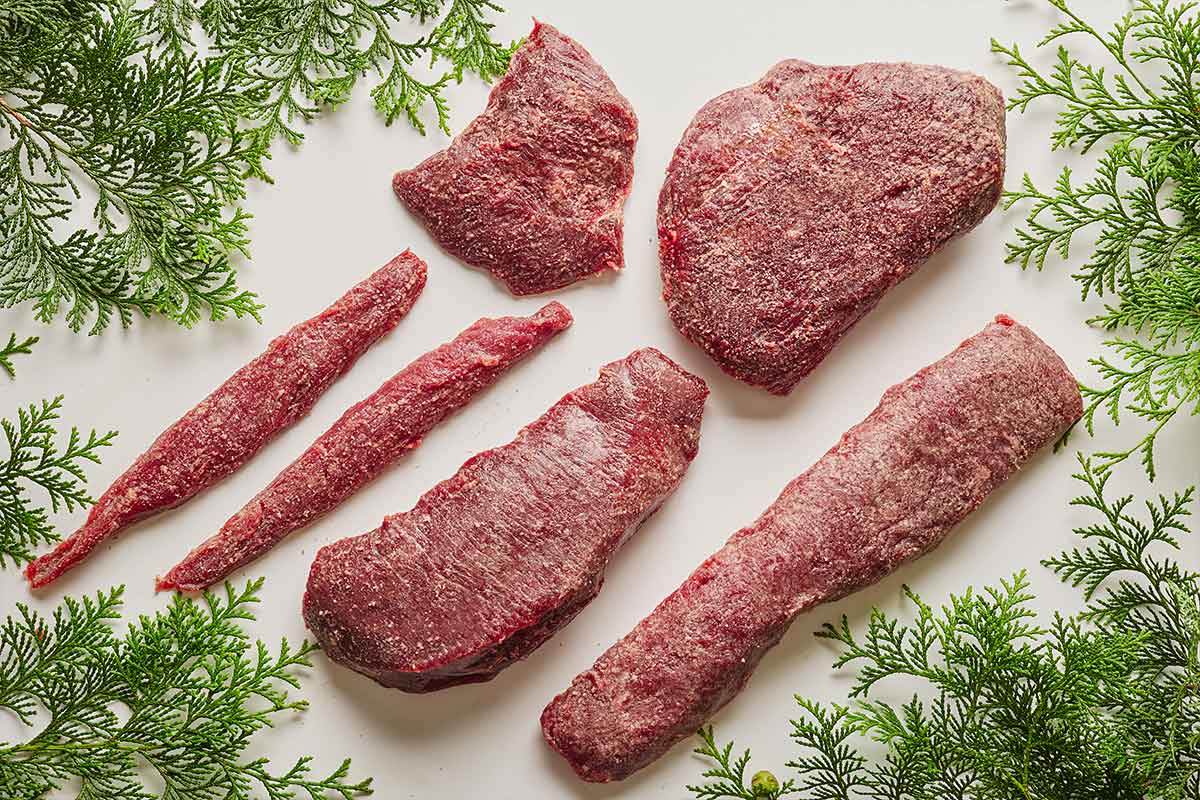
At Okuhatta Mori no Shikaniku Kobo, venison is sourced from local hunters and processed within one hour of capture, ensuring exceptional freshness. The workshop’s signature product, “Kamoshika”, is a koji-aged venison developed in collaboration with the Tajima Toji Association, a group of traditional sake brewers.
Through the natural action of koji enzymes, proteins are broken down into amino acids, resulting in venison with remarkable depth, tenderness, and umami—far removed from the toughness or strong odor often associated with game meat.
The idea to pair venison with koji emerged organically through collaboration with the brewers. While the development process involved extensive experimentation, Ozeki describes it as both challenging and deeply rewarding. (He invites readers to explore the full story on the company’s note page.)
Where to Experience “Kamoshika”
Dishes featuring Kamoshika can be enjoyed at select inns in Yumura Onsen, while fresh venison is also available for purchase at Hamasaka no Sato, the local roadside market. For home cooking, Ozeki recommends preparing it much like beef—ideal for grilling, curry, or frying.
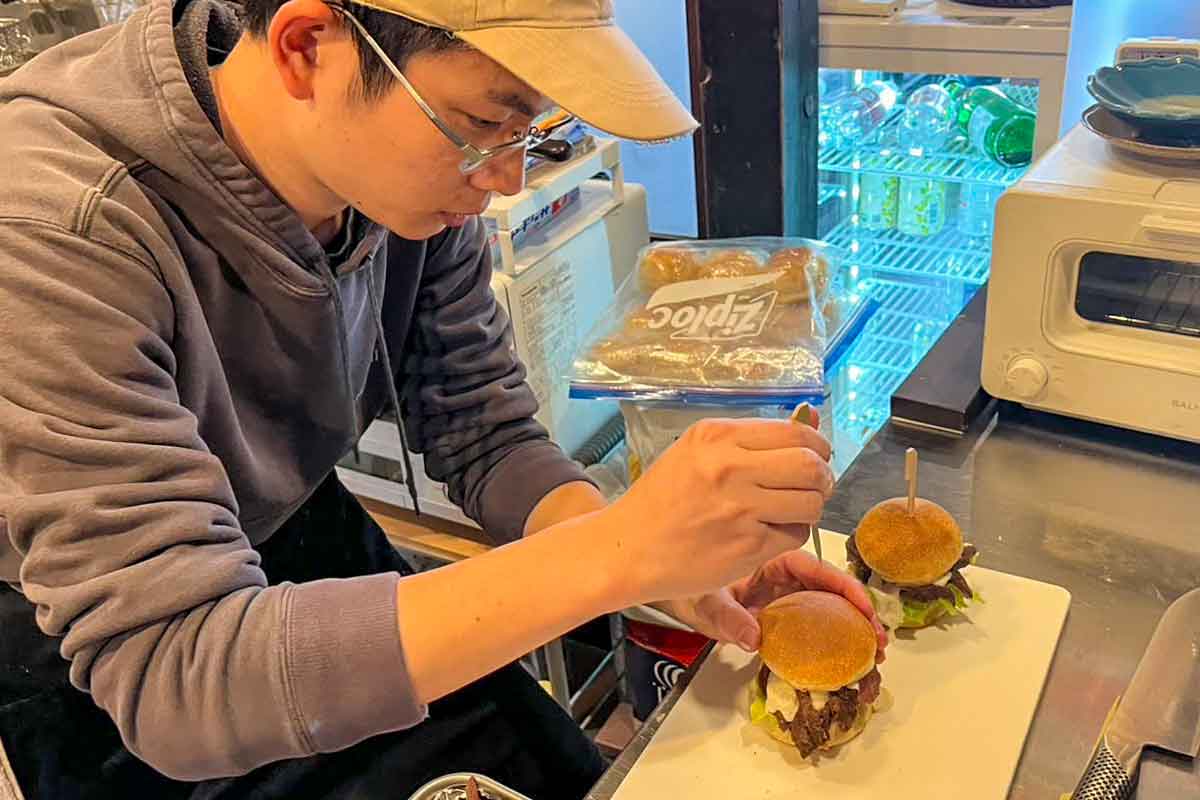
A limited-edition koji-aged venison roast burger was also introduced at a Kyoto restaurant, drawing visitors from afar. Many arrived with preconceived notions that venison would be tough or gamey, only to leave surprised by its tenderness, approachability, and rich flavor.
The Reality of Wildlife Utilization
Although interest in game cuisine has grown in urban areas, Ozeki notes that the majority of culled animals nationwide are still discarded. In many cases, transporting animals from remote capture sites is difficult, and processing them for food requires significant time and expense. As a result, only a small fraction of wildlife is actually utilized as food.
Rather than viewing this simply as waste, Ozeki believes it reflects the severity of wildlife damage itself—a problem that has grown too large to ignore.
The Broader Impact of Wildlife Damage
In the Tajima region, several hundred hunters are active, with around 100 in Shinonsen Town alone. Many are part-time hunters, balancing agriculture or other professions alongside wildlife management.
The damage caused by overpopulation extends beyond agriculture. Deer-related traffic accidents are frequent, sometimes resulting in severe vehicle damage. Forest ecosystems have also suffered, and even the recent increase in bear-related incidents can be traced, in part, to ecological imbalance caused by overgrazing.
The causes, Ozeki explains, are complex: reduced snowfall, changes in forest vegetation, and the decline of wild boar populations due to disease have all contributed to the current situation.
Looking Ahead
Through his work at Okuhatta Mori no Shikaniku Kobo, Ozeki hopes to share the appeal of Shinonsen Town with a wider audience and spark interest in the Okuhatta region and the Ueyama Highlands. More importantly, he aims to establish a model of sustainable rural activity—one that respects nature, supports local communities, and offers a path forward for future generations.
Thank you for reading to the end.