
Starting with Oumei no Gogo, an event that brought together a live performance by the music duo Mokuzō Kenchiku and works by lacquer artist Nagisa Nukina, Gallery Nikai has gone on to host exhibitions as part of KG+, a satellite event of the Kyoto International Photography Festival, as well as solo exhibitions by numerous artists.
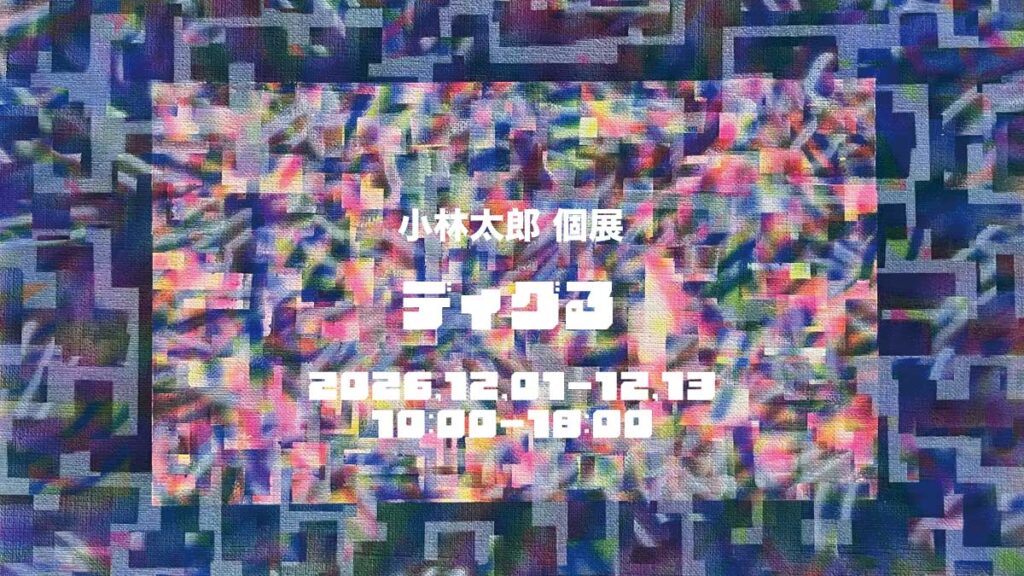
To close out 2026, Gallery Nikai will present Digging, a solo exhibition by Taro Kobayashi, opening on December 1. Kobayashi continues to develop his practice around the themes of “layers” and “sense.” In this interview, we explore his background as an artist, the ideas behind his work, and what to look for in Digging.
Challenging Perception and Rethinking “Sense”
Could you introduce yourself?
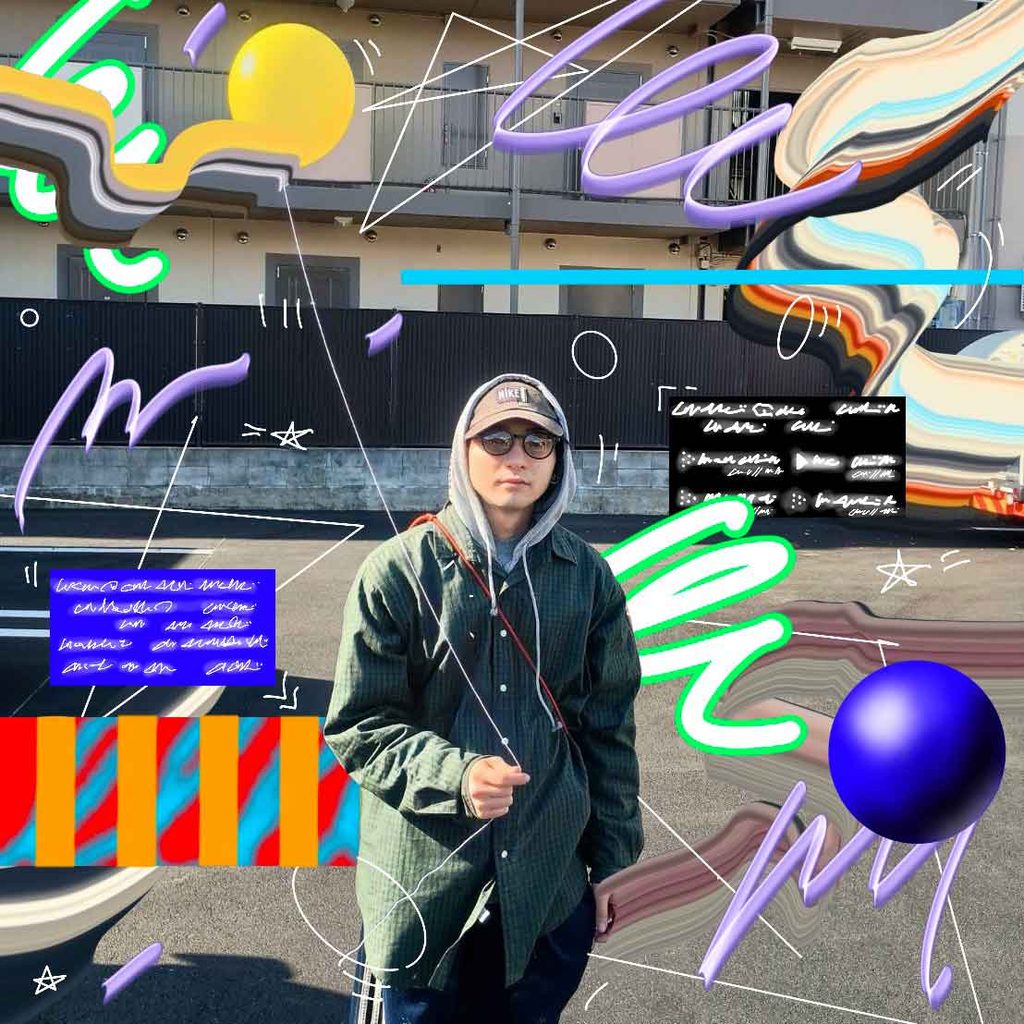
My name is Taro Kobayashi, and I am based in Kyoto. My work centers on the themes of “layers” and “sense.”I believe that information gains depth through multiple layers. At the same time, the noise that emerges in this process—in other words, shifts in information—blurs its singular meaning and creates room for different interpretations.
Through my work, I deliberately disrupt viewers’ visual perception in order to reconsider “sense”: the sensibility that shapes perception and judgment. By deliberately complicating the information I present, I seek to express the “sense” involved in selection and reconstruction.
What first inspired you to start drawing?
I have loved drawing since I was a child. In elementary school, I admired manga artists and began drawing manga myself.
When I was in middle school, I started attending a local art studio and began making artworks. There, I discovered the pleasure of expressing the images in my mind through my work. After holding my first solo exhibition in high school, I decided to pursue a career as an artist.
Which artists or works have influenced you?
When I was in middle school, the first artwork I came to recognize as a work of art was Passing Through by Saburo Murakami, who was a member of the Gutai Art Association. In high school, I was drawn to Surrealism and looked to the works of Salvador Dalí and René Magritte for reference.
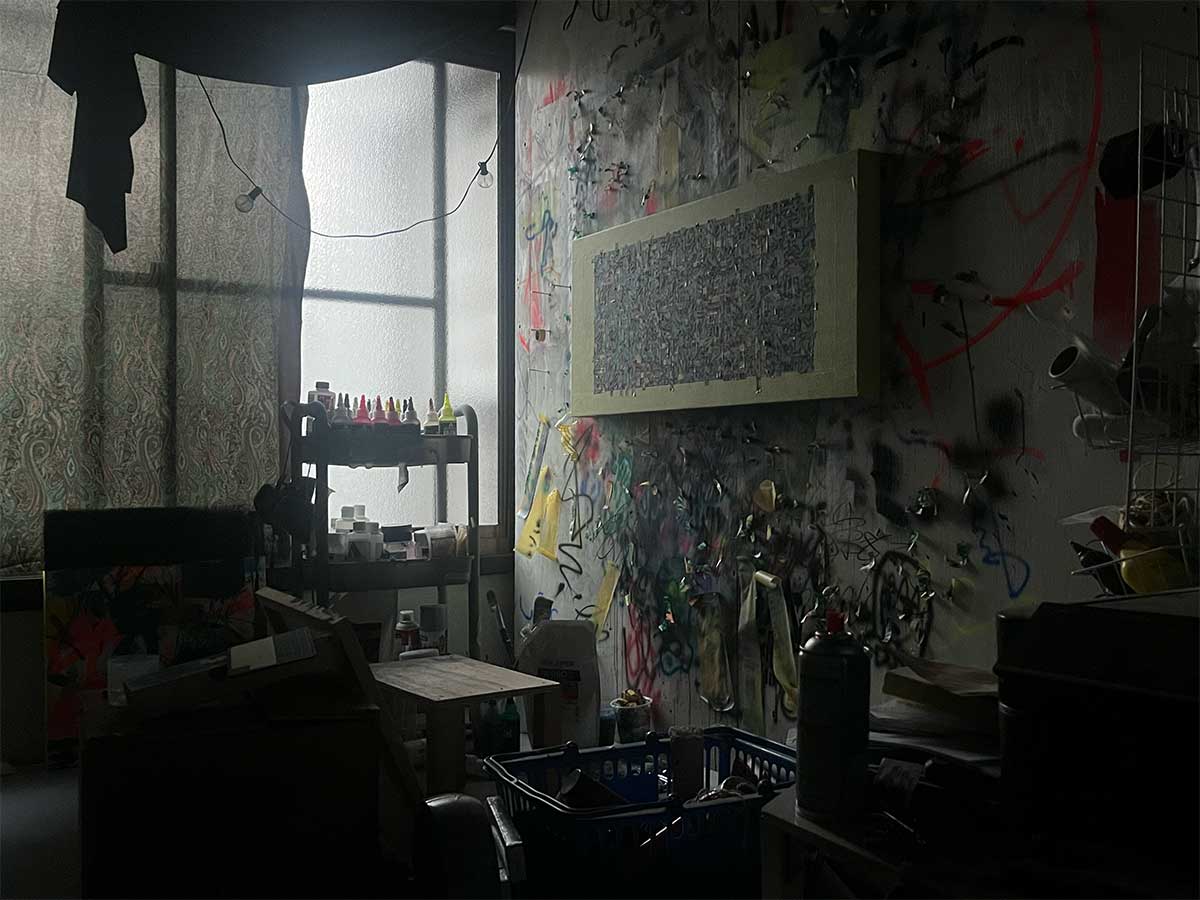
Today, I follow graffiti artists and contemporary artists whose work I encounter on Instagram. I also visit galleries and museums in Japan, looking for new approaches to making art and ideas that might inspire my own practice.
What do you express through your work?
Although the specifics vary from series to series, the overarching subject of my work is “information.” In the memorial structure series, I express “the remains of information,” while the spray composition series explores “the space of information.”
I also work to express information embedded in a wide range of subjects, including characters, time, and memory.
The Relationship Between the Individual and the Collective Through Marks
Could you tell us about the concept behind your solo exhibition at Gallery Nikai?
The title of this exhibition is Digging. The term was originally used in DJ culture, but it has since become widely used in other fields as well.
In the spray composition series on view, I attempt to isolate strokes that accumulate within society and form spaces of information, drawing attention to their individual characteristics and distinctive qualities. The concept of this exhibition takes shape through the combination of this process and the particular characteristics of the gallery space.
What kind of works will be on display in this exhibition?
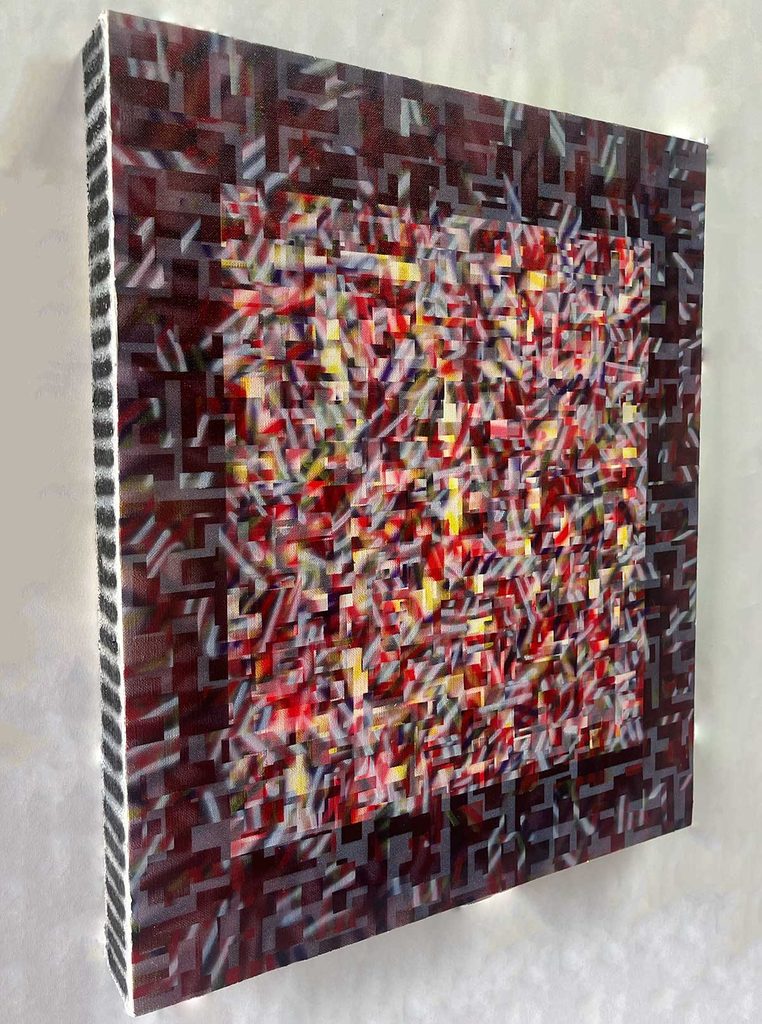
This exhibition will feature works from the spray composition series. In this series, I explore “the space of information,” treating spray-painted strokes as the smallest units of information.
Within the image, I depict a space of information formed by the accumulation of strokes. On the sides, which lie outside the main image, black strokes that do not belong to that collective retain their independent forms. Each stroke has its own shape and distinctive characteristics. However, as the strokes come together, their individual differences become harder to discern, and they transform into a single, homogeneous space of information.
I see this as a simplified depiction of how society is structured. Each individual has their own distinctive traits and characteristics, yet within the frameworks of a group or society, those individual qualities become less visible, and each person becomes part of the whole. My work expresses this kind of relationship.
What does artistic expression mean to you?
For me, artistic expression is a “catalyst.”
It involves giving form to pure emotions or phenomena that have no right or wrong answer and cannot be compared. I believe that expression takes place when this gives rise to a “reaction.” The scale of this reaction varies, from the individual to the world as a whole. I believe artistic expression can serve as a catalyst for change in people’s feelings and in society.
Taro Kobayashi: Digging
Dates: December 1–13, 2026
Closed: Monday, December 7
Hours: 10:00 AM–6:00 PM
Hours on the Final Day: 10:00 AM–5:00 PM
Admission: Free
Taro Kobayashi Instagram: https://www.instagram.com/teadrmotagram/